


What is Travellingo?
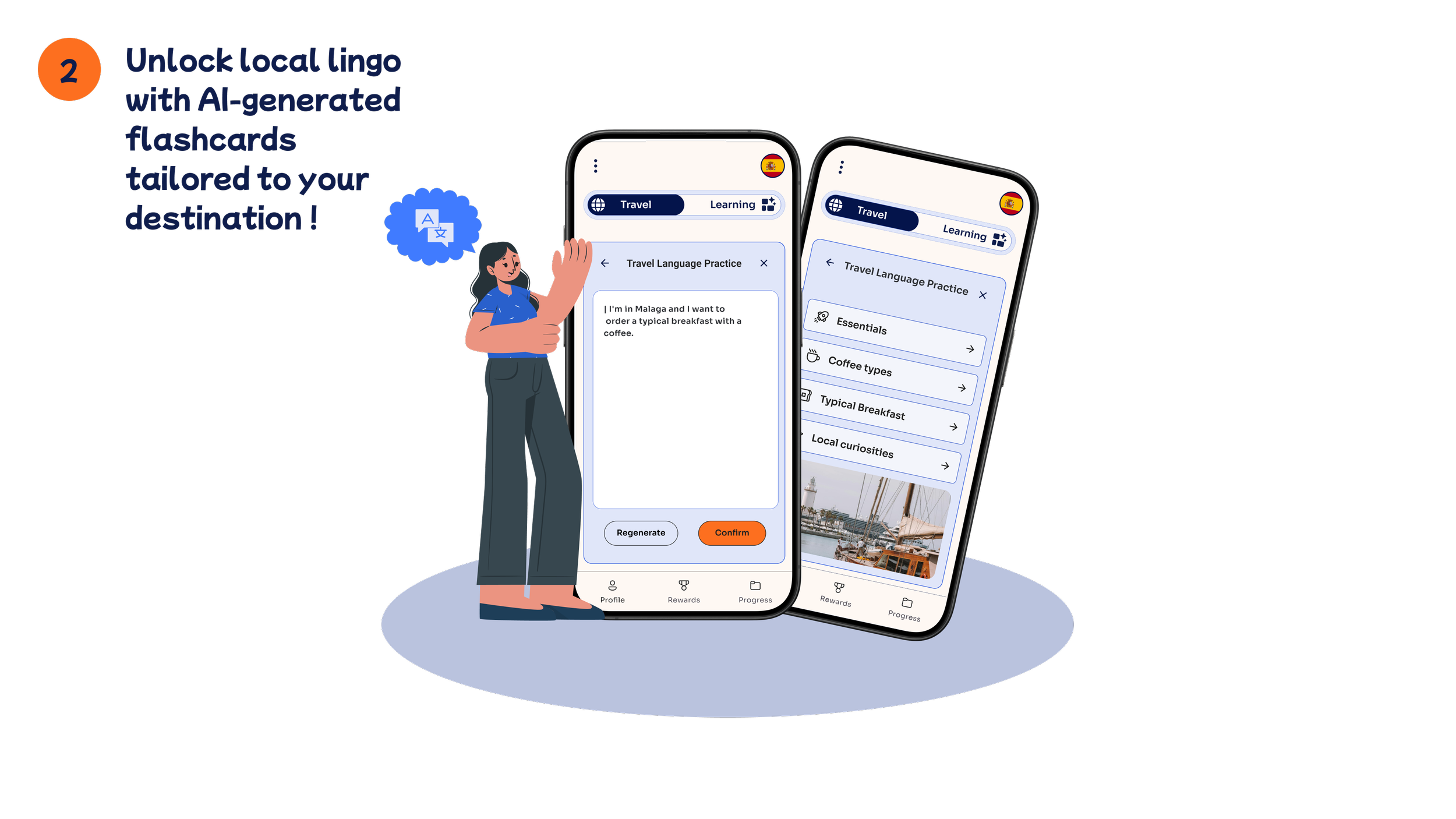
Developed an immersive language learning app that integrates travel and curiosity, incorporating personalized, location-specific AI-generated vocabulary flashcards. It offers a recording function with instant feedback and areas for further improvement, empowering users to practice speaking confidently in real-life scenarios.
Running low on time?
Learn about how I created my app, Travellingo, by watching my video.
How Travellingo Works:



Problem Space
European travelers face significant challenges in effectively improving their language skills to facilitate communication and cultural immersion while traveling abroad. With 46% expressing motivation for learning a new language, primarily for travel purposes and out of interest in the language, they still encounter barriers such as lack of motivation, time constraints, and ineffective learning approaches. Nearly 30% of travelers reported language barriers as an obstacle to their tourism experiences. Despite the wide availability of various language learning methods and digital platforms, current language learning applications on the market fall short in providing genuine and natural language immersion experiences.
Role:
UX/UI Designer, Researcher, Writer, Branding
Timeline:
10 Weeks, 2024
Tools:
Figma, OpenAi, Slack, StorySet
Os:
Android
Creating Travellingo:
I chose the Double Diamond method for my app development because it offers a structured approach to problem-solving and design. This method guided me through understanding user needs, refining ideas, and iterating on designs based on user feedback. It ensured a user-centred approach, leading to a more successful and impactful app.

Secondary Research

Reasons and barriers to learn a language in Europe

26 % of language app users learn a language to communicate better when travelling and 22 % out of the interest in the language.
In the EU, almost one quarter (24.8 %) of working-age adults who knew at least one foreign language reported that they knew their best-known foreign language at a proficient level.
In 2021, 88 % of pupils in upper secondary education in the EU were learning English as a foreign language.
The most common way in which foreign languages are learnt is at school (68%).
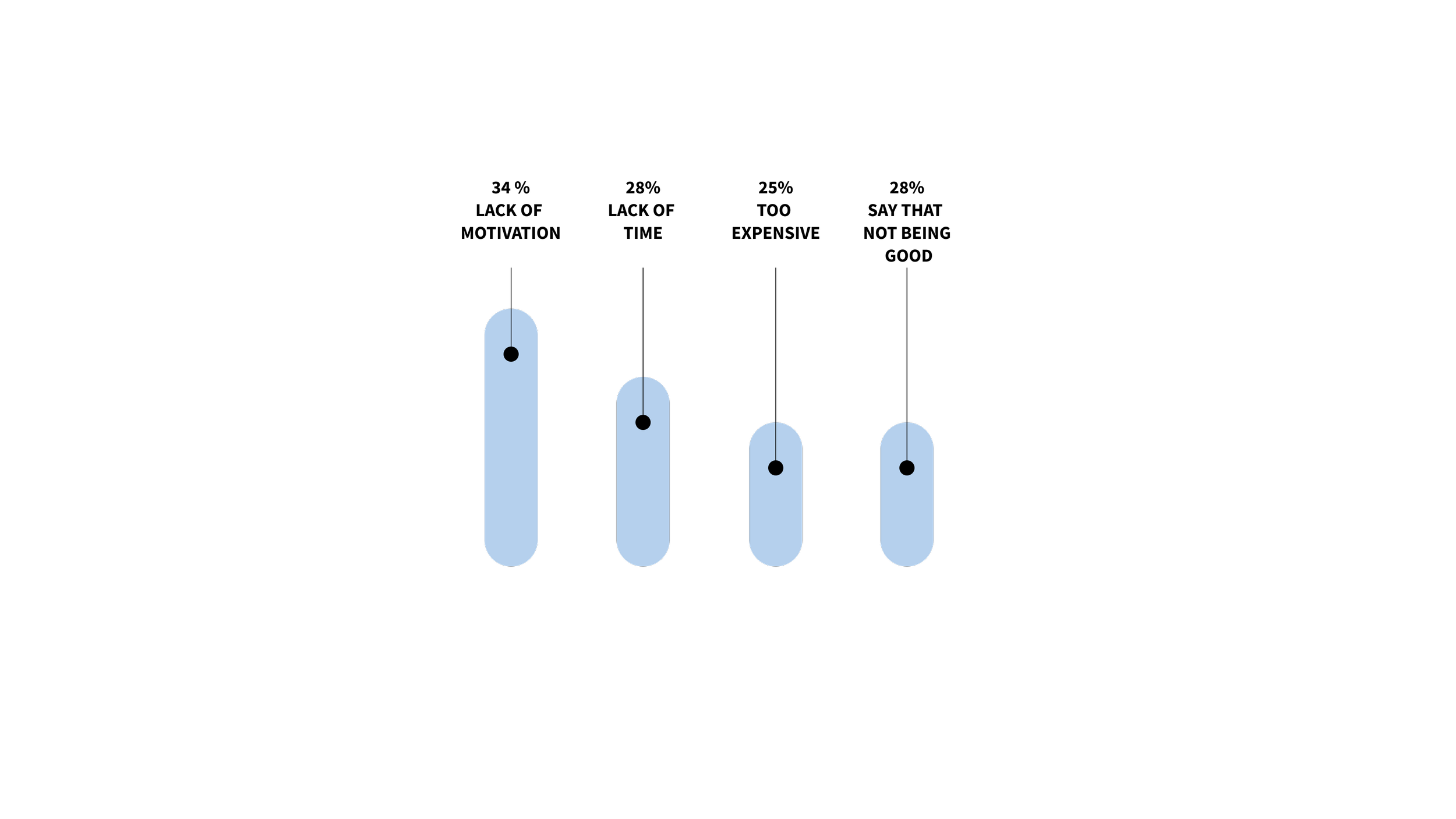
The most common barrier to learning another language is lack of motivation, with a third (34%) of Europeans saying this discourages them. Around a quarter of Europeans cite lack of time to study properly (28%) and that it is too expensive (25%). A fifth (19%) of Europeans say that not being good at languages discourages them.

26 % of of 20,500 travellers reported language barriers as an obstacle to their tourism.
Assumptions

I used assumptions as a foundation and starting point to conduct further research and prepare for user interviews. These assumptions guided the initial direction of my research, helping me identify key areas to explore and questions to ask during interviews. By validating these assumptions through user feedback and insights gathered from interviews, I was able to refine my understanding of user needs and refine the design of my travel and language learning app accordingly. This structured approach ensured that my research efforts were focused and productive,
-
Language learners are motivated to learn new languages for travel purposes or out of genuine curiosity about other cultures.
Language learners may feel frustrated by lack of progress despite effort, difficulty retaining vocabulary, or feeling overwhelmed by grammar rules.
Language learners may have experience with language apps, they may express frustration with their limitations, such as unrealistic sample sentences, lack of speaking practice, or difficulty in achieving conversational fluency.
Language learners may feel frustrated by the gap between their perceived progress in language apps and their ability to use the language in real-life situations.
Language learners may express difficulties while traveling, such as communicating basic needs, feeling isolated in unfamiliar environments, or missing out on authentic cultural experiences due to language limitations.
Hypothesis

I belive that despite individuals' interest in learning languages for travel purposes, their language learning efforts may not always effectively facilitate communication in real-life situations due to frustrations with ineffective learning methods, lack of motivation, or time constraints.
I will consider this hypothesis to be true supported if at least 2 out of 3 interviewees express frustrations with language learning methods that they perceive as ineffective in helping them communicate effectively in real-life situations.
Research Methodology: Interview

Through conducting user interviews, I gained valuable insights into the frustrations and challenges faced by language learners. These interactions emphasized the importance of active listening and asking open-ended questions to elicit genuine responses from participants. Additionally, maintaining a neutral stance during interviews was essential to creating an unbiased environment. Integrating these insights into my approach allowed me to gather meaningful feedback and address user needs effectively.
-
Currently or previously studied a foreign language.
Travels abroad often
Ever used Mobile-assisted language learning (MALL).
Ever studied a language in the school system.
Ever engaged in self-study for language learning purposes
View learning a foreign language as a valuable skill
Attended school in Europe
Learns a language out of interest in the language or for traveling
-
Can you describe to me your last experience that you had abroad and the moment when you had to communicate in a foreign language? 2. Can you tell me about your experience with learning foreign languages?
Follow-up 1: How did it make you feel?
Follow-up 2: Could you share any frustrations or challenges you've encountered?
2. Can you tell me about your experience with learning foreign languages?
Follow-up 1: What motivated you to start learning?
3. How do you typically approach language learning?
Follow-up 1: Do you have any preferred methods?
4. Have you ever used mobile apps or digital platforms to assist with language learning?
Follow-up 1: What has been your experience with them?
5. How do you feel about traditional language learning methods, such as classroom instruction?
Follow-up 1: What advantages or disadvantages do you see in this method
6. How do you feel about the effectiveness of language learning apps?
7. Can you share any specific instances where you felt frustrated or discouraged while you were learning a new language?
Follow-up 1: What contributed to those feelings?
8. How difficult do you find to allocate time for language learning? Why?
9. How do you measure your progress in language learning? Do you set specific goals or milestones for yourself?
10. Have you ever participated in language exchange programs or conversational practice sessions? What has been your experience with them
11. What do you think could be done to improve language learning experiences, particularly for travelers who want to communicate effectively in foreign languages?
12. How do you prepare yourself when traveling to a foreign country where the
13. language is different from your native one? Or how do you go about communicating to locals in a foreign country?
Note: These questions served as the primary framework for discussions. I observed that certain individuals were more talkative, naturally bringing up important issues, while with more reserved people, I needed to focus more on follow-up questions to delve into the 'why' behind their responses.
-
From your user interviews, several key insights emerged:
Confidence to Speak: Users expressed frustration with existing language apps, noting that they often lacked confidence to speak in real-life scenarios. Many perceived their progress and language level based on emotional factors linked to their ability to comfortably speak.
Fear of Judgment: Some users were fearful of being judged for making mistakes while speaking, which hindered their language learning progress.
Regional Variations: Users struggled with understanding regional words and accents, highlighting the non-homogeneous nature of language as a challenge.
Importance of Active Learning: Interviewees emphasized the importance of active learning techniques that would empower them to speak confidently and comfortably.
-
In addition to the user frustrations and challenges uncovered, I also learned valuable lessons about conducting effective user interviews:
Active Listening: The importance of active listening became evident during the interviews. By fully engaging with participants' responses, I gained deeper insights into their experiences and needs.
Avoiding Leading Questions: I recognized the significance of asking open-ended questions to encourage participants to share their genuine thoughts and experiences without leading them towards a specific response.
Minimizing Biases: To ensure the interview process was unbiased, I made a conscious effort to minimize my own biases. This approach helped create a more neutral and open environment for participants to express themselves authentically.

Hypothesis Validation
After the interview, it turned out that 3 out of 3 interviewees expressed frustrations with language learning methods that they perceive as ineffective in helping them communicate effectively in real-life situations therefore, I consider the following hypothesis to be true.
I believe that despite individuals' interest in learning languages for travel purposes, their language learning efforts may not always effectively facilitate communication in real-life situations due to frustrations with ineffective learning methods, lack of motivation, or time constraints.
Affinity Mapping
I utilized the affinity mapping process to organize and synthesize research findings, observations, and user insights. By gathering a diverse range of quotes and observations from my participants and sorting through these insights, I identified recurring pain points, behaviors, and goals. As I sifted through the data, intriguing patterns emerged, guiding me towards common themes that would drive my design decisions. This method not only distilled complex information but also sparked a clear path forward, ensuring my design approach directly addressed the most pressing user needs. After analyzing the advantages and disadvantages of each theme, I decided to focus on the theme “Travel, Mobility and Cultural Integration”.

Persona

To better understand the user perspective, I created a persona. Let's meet Barbara, a traveller and language enthusiast. She loves connecting with people, but she often feels frustrated when language learning seems unsuccessful or when she forgets previously learned words.
Barbara represents the core attributes of my identified target audience.
I created this persona by consolidating my user interviews and secondary research findings from European travellers and language learners.

Learn more about Barbara:
-
Barbara works as a pharmacist for a local company. She often travels across Europe with her husband or to visit her daughters. She likes to learn languages that she enjoys listening to. The listening aspect is very important because she likes listening to music and watching movies. It gives her great satisfaction when she manages to communicate in a specific situation abroad. She is busy and only has time to study during lunch or during short breaks.
She likes using language apps because she can use them in various situations, such as riding a bike, waiting in a car or walking. In current applications, she misses real-life situations and the feeling of starting to speak.
-
Always be able to communicate in everyday situations abroad
Wants to connect with people and cultures
Being able to say something when visiting your daughters abroad
To feel more confident in speaking
Love to travel
Likes playing mobile games
-
Forgets about useful words
“I already knew some words in Spanish since I try to practice it everyday, but trying to chat with the locals? Challenging”
Find more motivation to learn when not traveling
Gets bored with the monotony of the lessons
Doesn't understand different accents
-
Uses various applications every day
She learns in any situation and everywhere
Has little time for learning
Travels a lot
Works a lot
-
Duolingo
Google Translator
Reverso
Babbel
Instagram
Facebook

How Might We help European travellers effectively improve
their language skills in various foreign contexts in order to facilitate
communication and cultural immersion?
User stories
By creating user stories, I empathized with users and gained a deeper understanding of their experiences. This process helped me prioritize features, make informed design decisions, and ensure that the final product met user expectations and effectively solved their problems.
Main User Story
As a European traveller and language enthusiast, I want to engage in real-time language practice so that I can actively improve my language skills during my travels.
-
As a European traveller and language enthusiast I want like to learn regional words and local accents from the countries I am interested in the most so that I can understand the language from different regions during my travel
As a European traveller and language enthusiast, I want to engage in real-time language practice so that I can actively improve my language skills during my travels.
As a European traveller and language enthusiast, I want to engage in role-playing exercises to simulate real-life interactions, such as ordering food at a restaurant or asking for directions, so that I can apply language skills in practical scenarios.
As a European traveller and language enthusiast I want an immersive AI translator for travel so I can understand everything when travelling.
As a European traveller and language enthusiast I want to play an immersive real-world game that would combine my passion for travel and languages so that I can get an unique experience
As a foreign language passionate I would like to to see a live AI conversation tool so I can fully immerse in the new language.
As a European traveller and language enthusiast, I want to engage in interactive simulations that replicate real-life cultural scenarios, such as attending local festivals, dining at authentic restaurants, or participating in traditional ceremonies, so that I can practise language skills while experiencing the rich cultural heritage of different destinations.
As a European traveller and language enthusiast, I want virtual language tours that take me on a journey through iconic landmarks and cultural sites of my chosen destination, providing immersive language learning experiences through audio guides, interactive maps, and virtual reality technology so that I can improve my understanding of local language and culture before my trip.
As a European traveller and language enthusiast, I want immersive challenges that push me to use my language skills in practical and dynamic situations, such as solving language puzzles, completing scavenger hunts, or participating in role-playing games with native speakers so that I can get a rapid language acquisition and cultural integration during my travels.
As a European traveller and language enthusiast, I want to participate in virtual language exchanges with native speakers from my travel destination so that I can practise conversational skills and gain insights into local culture before my trip.
-
As a passionate traveller and language learner, I want a personalised learning plan tailored to my upcoming destinations so that I can focus on mastering language skills relevant to my travels.
As a European language enthusiast I would like to learn local accents and words from the countries I want to visit so that I can understand the language from different regions during my travel
As a frequent European traveller I want to get a glimpse of travel vocabulary from different countries so that I can know some useful words during my travel
As a European traveller I want a language game so that I can learn a language in a fun way
As a European language enthusiast I want an immersive AI tool for a travel so I can feel like local when travelling
As a European traveller and language enthusiast I want to play an immersive real-world game that would combine my passion for travel and languages so that I can get an unique experience
As a European traveller and language enthusiast I would like to to see a live AI conversation tool so I can fully immerse in the new language
As a European traveller and language enthusiast I would like to get an analysis of my real-life conversations so I can continue to improve.
As a European traveller and language enthusiast, I want to connect with fellow learners during my travels so that I can make friends and continue practising together even after our trip ends.
As a European traveller and language enthusiast, I want to connect with local people willing to speak with me in their language so that I can get a full cultural immersion during my travels.
As a language learner I want to have AR real native speaker feature so I can improve my language skills in most effective and organic way.
As a European traveller and language enthusiast, I want to practise real-life scenarios during travel so that I can enhance my communication skills for effective interactions during my trips
As a European traveller I want to practise a real time learning situations that would occur during my travel so I can communicate effectively during my travel.
As a European traveller and language enthusiast I want to get language challenges in an engaging way so I can have fun while learning
As a European traveller and language enthusiast I want a free-walking self guided tour in a language I learn so that I can get a travelling and learning experience
As a traveller passionate about languages and history, I want to engage in a scavenger hunt game that immerses me in real landscapes so I can learn a new language while exploring.
As a busy professional interested in languages I want an effective way to verify my learning progress so that I can learn in most effective and fast way.
As a busy European professional seeking efficient language learning methods, I want a reliable way to track my progress so I can learn quickly and effectively.
As a frequent traveller I want a AI teaching tool that would analyse my responses with locals and would provide an instant feedback after my conversations so I can continue improving
As a European traveller and language enthusiast I want a tool that would facilitate my conversation with people so that I can feel confident practising even when I am still a beginner.
As a language learner and European traveller, I want a feature to help me learn essential phrases specific to my upcoming destination so that I can communicate effectively during my trip.
As a European traveller, I want a language learning app that offers cultural insights and local customs so that I can continue enhancing my understanding of the places I visit.
As a frequent European traveller, I want a language learning app that offers cultural insights and local customs, so that I can better understand the places I visit.
As a European traveller, I want interactive lessons that simulate real-life scenarios I may encounter abroad, so that I can navigate common travel situations with ease.
As a language enthusiast, I want a feature that allows me to practise pronunciation with feedback from native speakers, so that I can improve my speaking skills before travelling.
As a traveller interested in authentic experiences, I want language common situations exercises like shopping or interacting with locals, so that I can engage confidently during my journey.
As a language learner with limited time, I want offline access to lessons and resources, so that I can continue learning even without internet connectivity while travelling.
As someone who struggles with motivation, I want gamified elements within the language learning app, so that I can stay motivated and committed to learning.
As a solo traveller, I want access to a language community, so that I can connect with fellow learners or find language exchange partners and feel supported during my learning experience.
As a traveller who values cultural immersion, I want insights into local traditions, cuisine, and customs, so that I can fully immerse myself in the culture of the places I visit.

Epics and User Stories Categorisation
I've chosen the "Real-world Practice and Immersive Experiences" epic for our UX project because it perfectly aligns with the needs of language learners preparing for travel. This epic emphasizes providing users with authentic language learning experiences that mirror real-world travel scenarios, enhancing language proficiency, cultural understanding, and travel readiness. It empowers users to speak confidently in diverse environments, offering dynamic and enjoyable learning activities that keep them motivated and committed to their goals.
Experience Mapping
From Barbara’s current experience map I found that she is satisfied with existing learning apps for everyday learning but she may feel frustrated when trying to use learned words in real - life situations. So I decided to develop a solution to offer continues support in practical situations where other apps may lack.


Opportunities from the Experience Map
Task Flow
To ensure a holistic approach in addressing the needs of language learners and travelers, I've divided the usage of my application into three stages:
Before travel: Learning and discovery
During travel: Language experience - practise and engagement
After travel: Insights and Improvement

In response to selected user story, I created a task flow for my application.
User story: As a European traveller and language enthusiast, I want to engage in real-time language practice so that I can actively improve my language skills during my travels.
Scenario: Barbara prepares for her trip to Spain by exploring her language dashboard in the app. To feel confident, she refreshes her vocabulary and learns typical words from Andalusia using AI-supported flashcards tailored to the location. After completing the lessons, she tries the live recording feature. Barbara records freely, knowing that the app captures only specific words and phrases needed for analysis. She receives instant feedback and valuable recommendations for improving her language skills, boosting her confidence for the upcoming trip.
Final task flow

-
Developing a task flow proved challenging as I aimed to create an efficient structure that directly addressed user needs. The task flow focuses on two main functions:
AI-generated flashcards for review, engagement, and empowering to speech
Recording feature for practicing and analyzing learned words for continuous improvement. The recording feature posed significant challenges due to privacy and trust issues associated with it, evolving significantly throughout the application development process.
User Interface Inspiration Board


Sketches
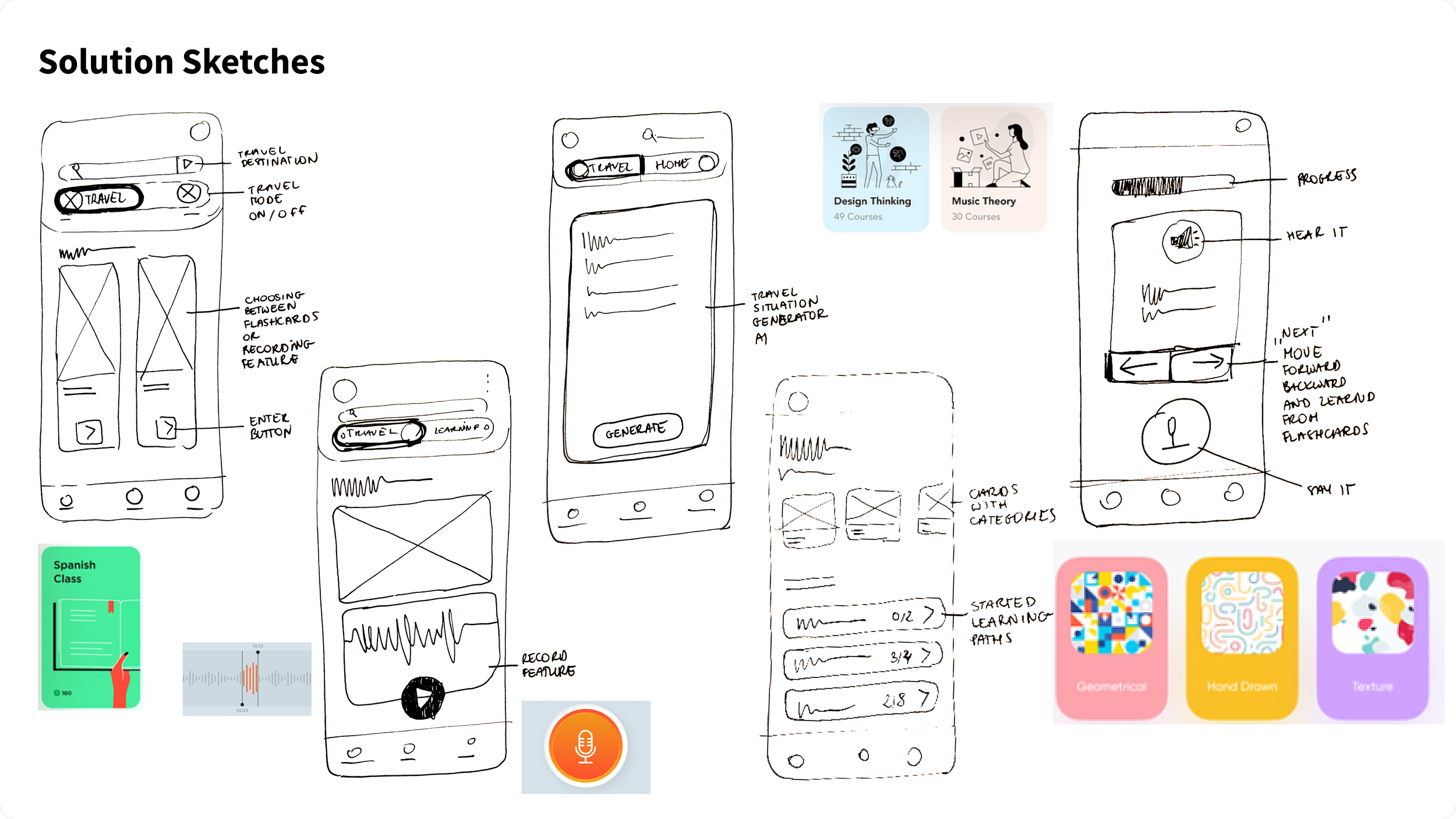


Low Fidelity Wireframes

User Testing and Design Iterations


The importance of testing and iteration
The project highlighted the critical importance of testing and iterative design processes in project development. Early testing was found to be essential for validating assumptions, identifying usability issues, and gathering valuable feedback for design improvements. Prioritizing testing facilitated faster validation of ideas, enabling more effective iterations and enhancing the overall project quality. This process emphasized the necessity of integrating testing early and consistently in the design process to ensure a successful and user-centered outcome.
-
Importance of Testing: The project emphasized the significance of prioritizing tasks, particularly in testing. Through early testing, it is possible to validate quickly assumptions, identify usability issues, and gather valuable feedback to drive improvements.
Focus on Specific Features: Effective design requires prioritizing specific features to avoid diluting attention and ensure efficient resource utilization. Initially, numerous concepts may arise, making it challenging to select just one. However, starting with a single idea simplifies the process and allows other concepts to complement or enhance it in the future, providing scalability and adaptability. Narrowing down ideas to those most relevant to project goals ensures more efficient goal achievement.
Understanding the Impact of Details: The project highlighted the significance of understanding how subtle design elements can influence users' perception and overall experience. Minor variations in design, such as lines, shapes, or specific wording, can have a profound impact on how users interact with and interpret functionality, emphasizing the need for careful consideration and refinement of these details.
-
User Engagement: Would people actually want to record themselves? Would recording actually help them? While receiving personalized exercises would undoubtedly aid in development, the act of recording itself may lead to psychological resistance.
Privacy Considerations and Legal Compliance: How can we ensure that recording meets legal privacy requirements without infringing on anyone's rights? Initially, recording would be focused solely on the user of the application, but in the future, it could be expanded to mutual recording with other users, creating a community. However, mutual recording would require adding authorization for the other party to record or legal awareness of the person recording.
User Support and Stress Management: The recording feature aims to challenge users to try using the language in real-life situations. However, users may still feel stressed and need extra help, such as an emergency translator. It's worth considering such scenarios and what happens if a user forgets what they intended to say.
Virtual Travel and Cultural Exploration: The feature of generating helpful words and phrases for specific situations and places provides an opportunity for curious users to explore cultural customs worldwide, enabling them to virtually travel without leaving home. It would be interesting to add more interesting facts about a specific place according to the user's interests.
Creating Brand Identity


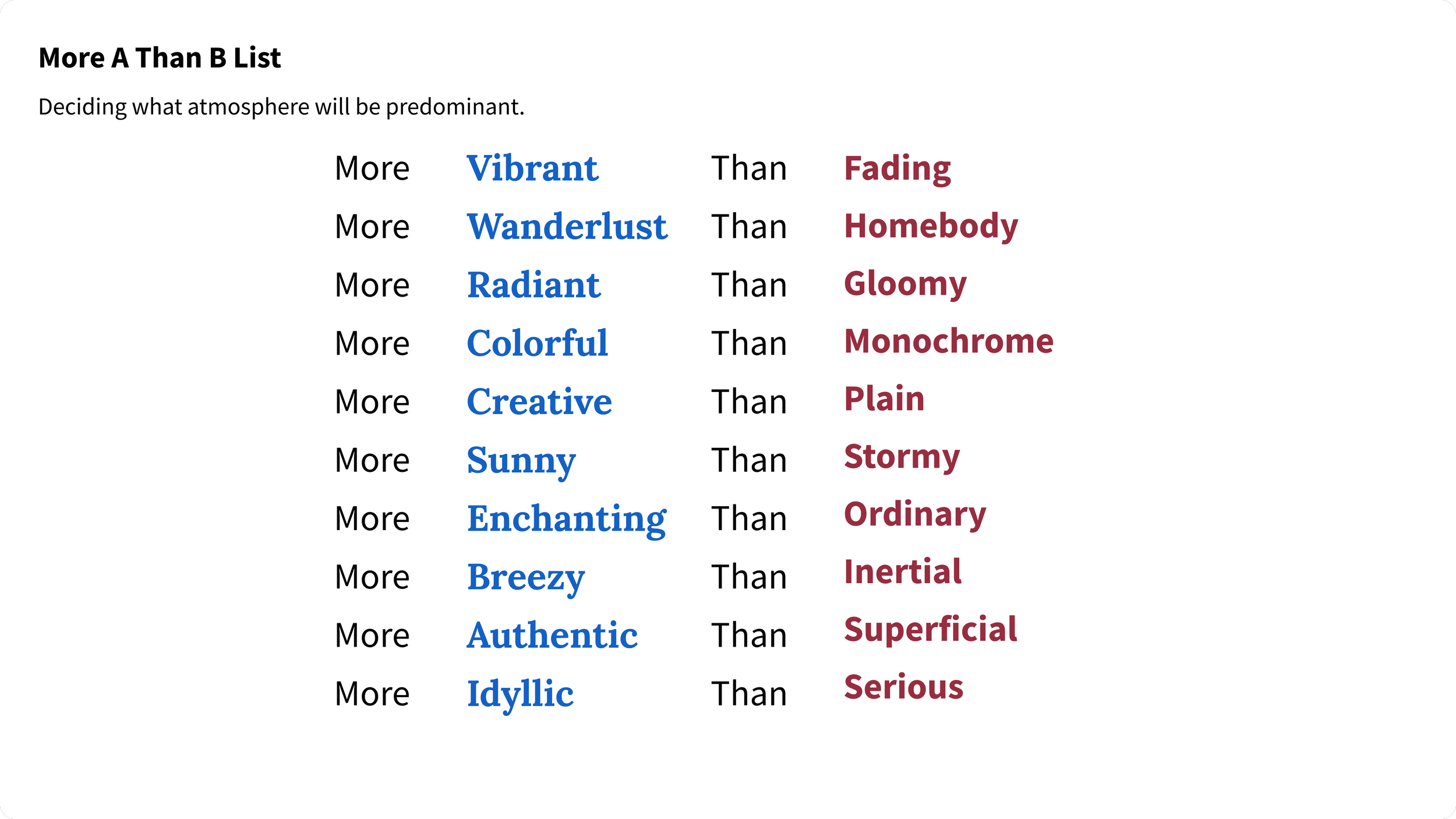
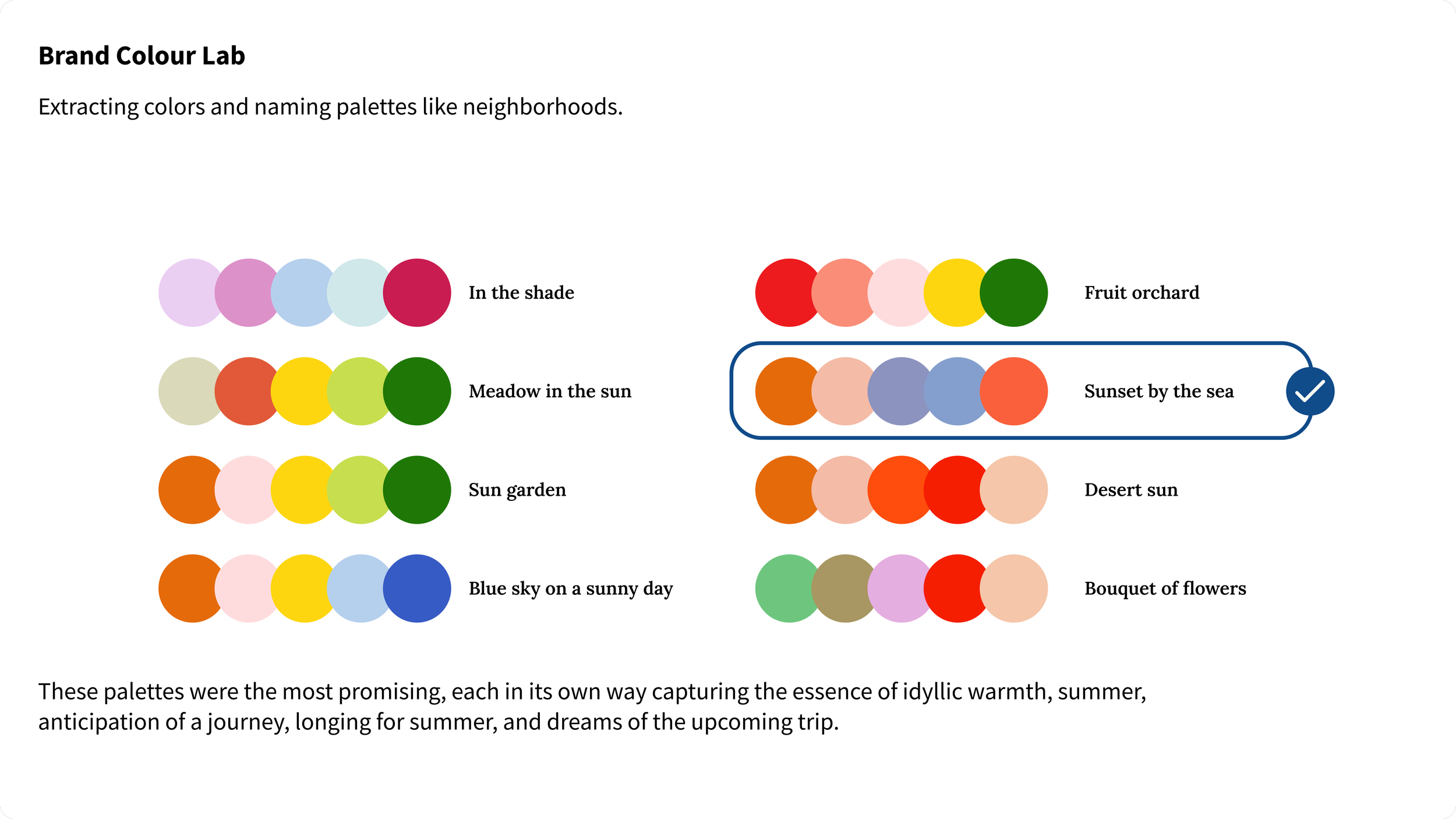
Analysing colours


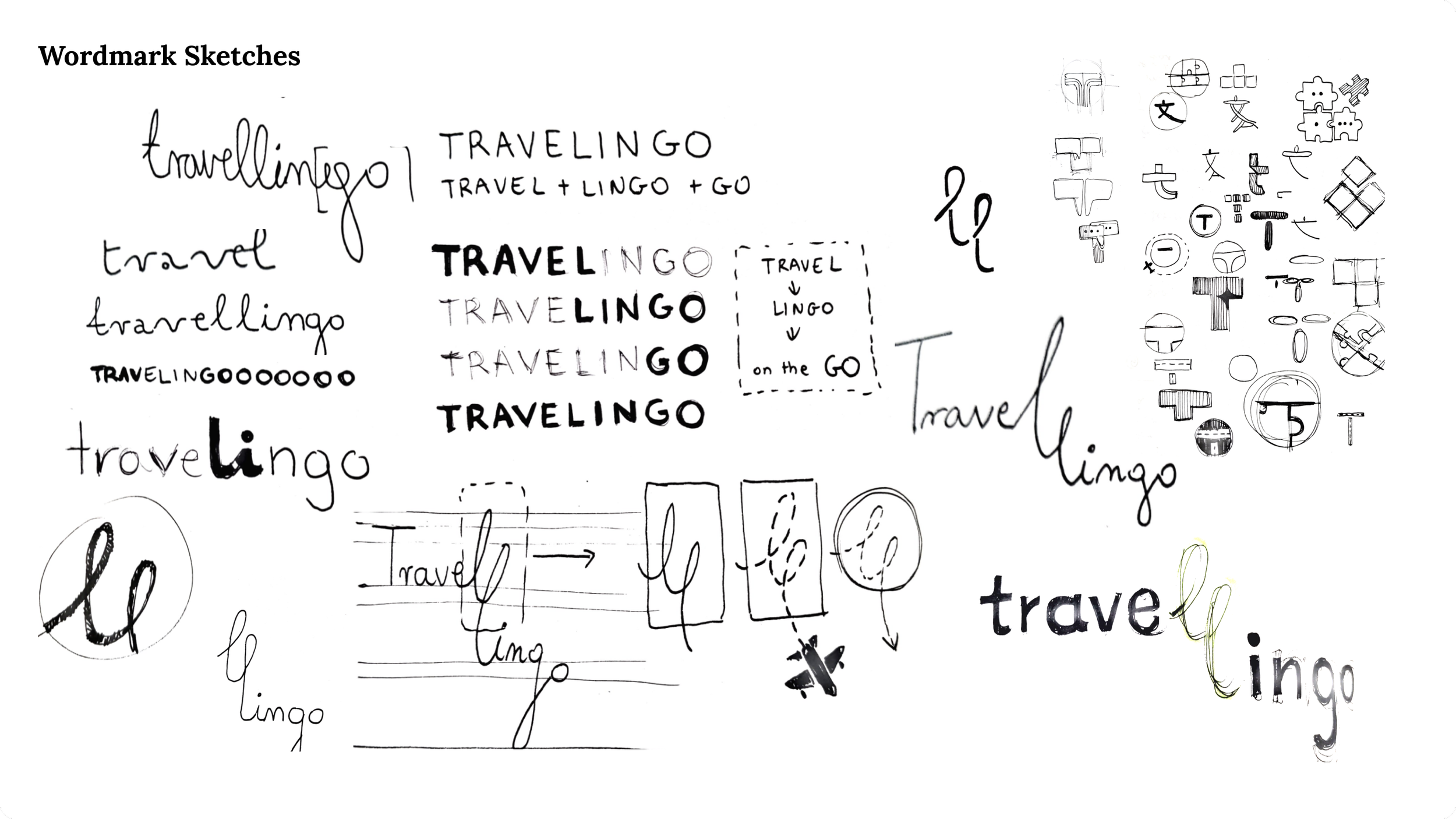
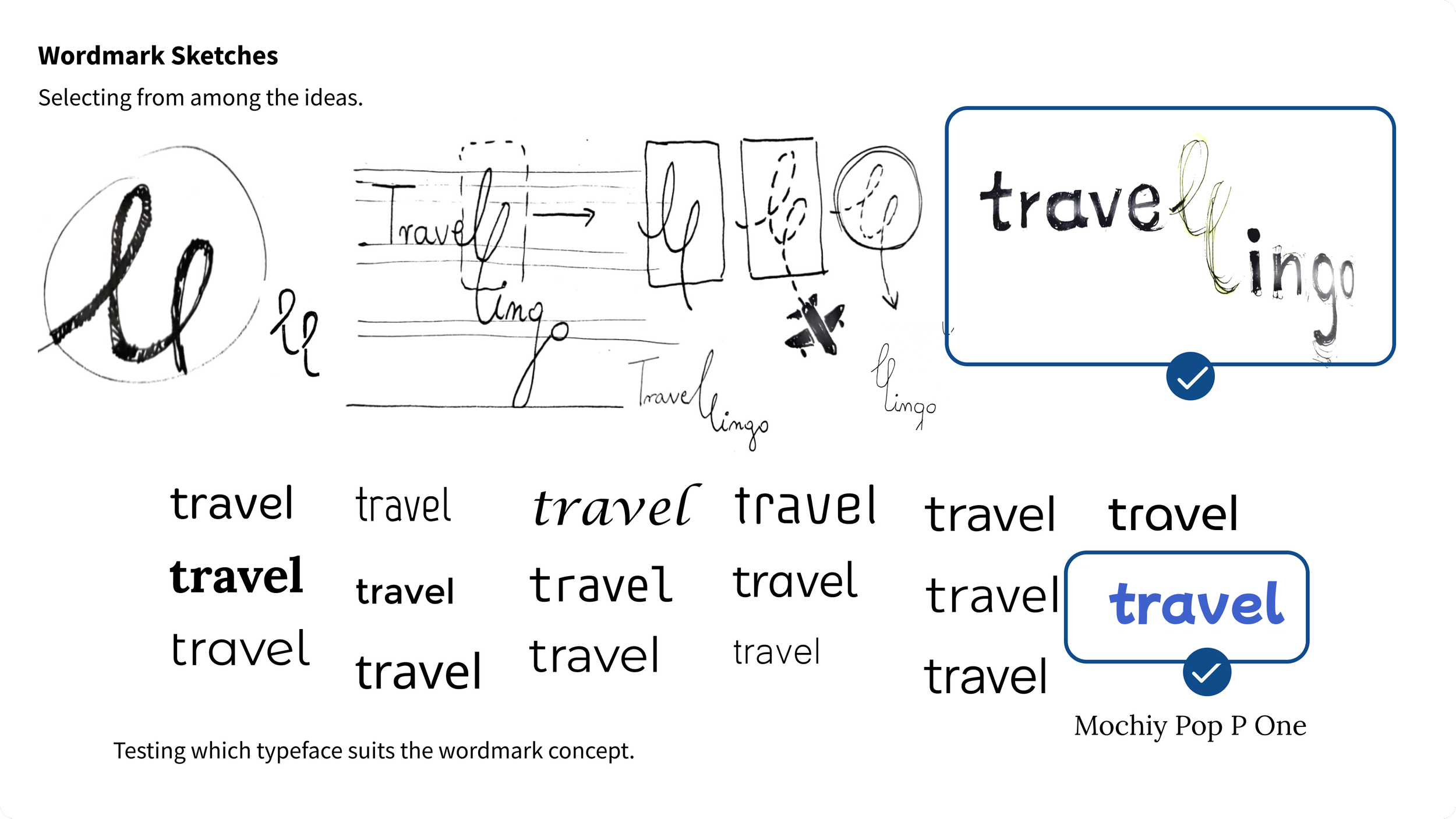
Wordmark




User Interface Library


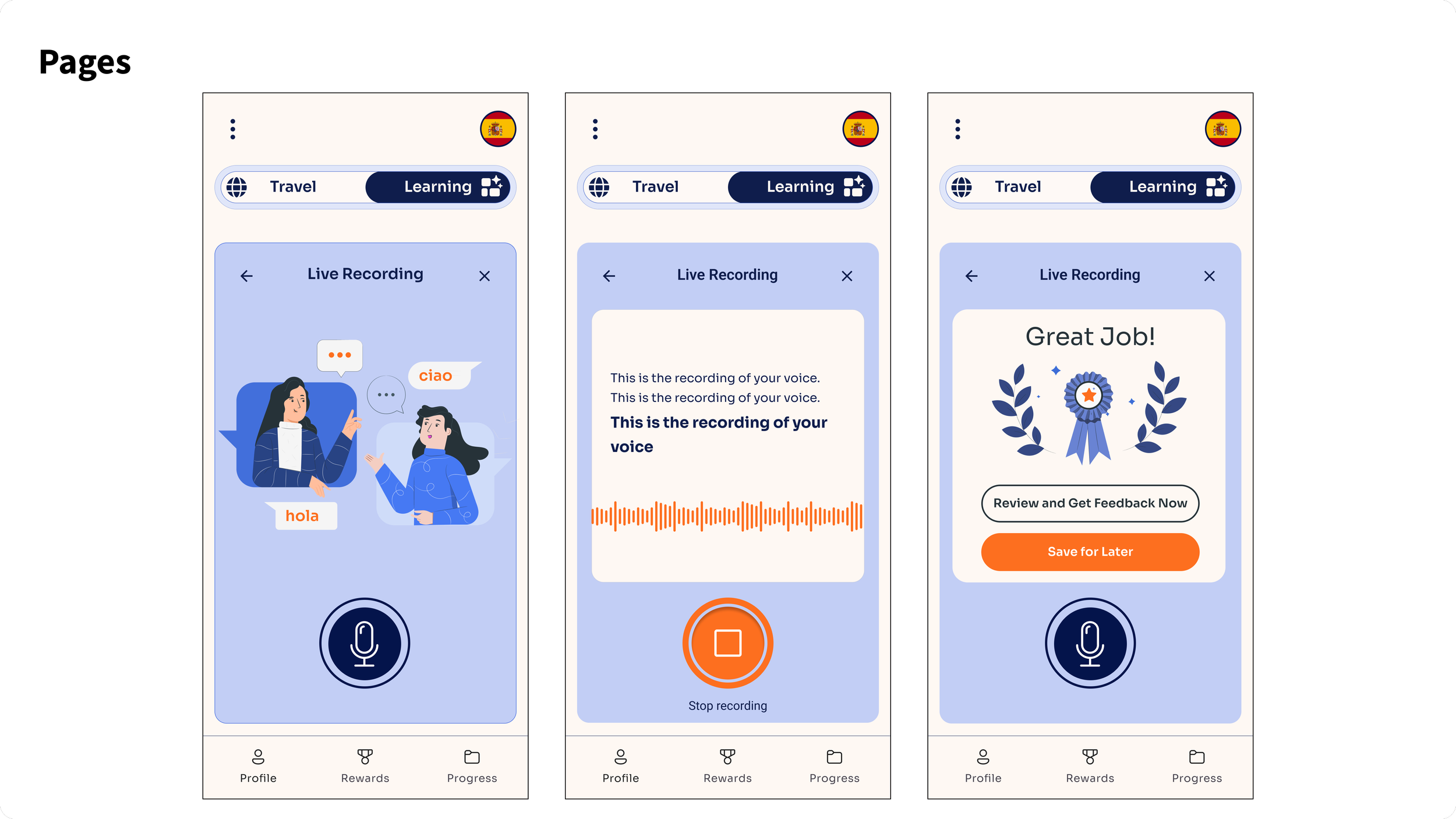

High Fidelity Mockups

Alternate platform device
Additional User stories:
As a busy professional, I want the ability to learn a language anytime and anywhere, so that I can make the most of my time and enhance my productivity.
As a language enthusiast with a hectic schedule, I seek a flexible way to learn languages on the move so that I can practice whenever I have a moment free.
As part of the project, after creating the application, I also considered what could be the most beneficial alternative device type to use for my persona. Reflecting on the interviews I conducted during the project, I recalled how many individuals emphasized the importance of learning on the go and from any location. Therefore, I crafted alternative user stories based on this insight:

After analyzing various possibilities, I created a storyboard and subsequently decided that the best alternative would be wearables.
Later, setting aside time for brainstorming, I designed a draft of a potential solution for Google Wear OS:

Marketing Webstite
Thinking how to effectively communicate the value of my application and which features deserved emphasis, I crafted a marketing page with responsive design optimized for both web and mobile platforms. This process allowed me to showcase the application's key benefits in a user-friendly and accessible format across various devices.
Below are some excerpts from this page:


Design impact

-
To maintain trust in my product, I've carefully considered several risks that could impact user confidence.
One significant concern is data security and privacy. Users may lose trust if they feel their data is at risk of breaches or unauthorized access. Initially, users had the option to save recordings, but I realized this wasn't essential for user empowerment and could pose privacy risks. Instead, I focus on boosting users' confidence in speaking, aligning with their primary success metric for language proficiency.
Moving forward, I would enhance privacy by incorporating encryption, profile verification, community guidelines, and data access controls. These measures are critical for building and maintaining user trust, ensuring that my product remains focused on empowering users while safeguarding their privacy.
Another critical factor is the accuracy and reliability of the feedback and analysis provided by the application. Users rely on this feedback to improve their language skills, so ensuring precision is paramount to maintain trust. By addressing these risks and continually improving the product based on user feedback, I aim to build and maintain trust among users, emphasizing privacy, accuracy, transparency, and user experience as foundational elements of our approach.

-
I designed the recording feature to serve as a helpful tool for improvement, intending to empower users to eventually transition to more organic, independent speaking as they gain fluency and confidence. It's crucial to me that the app doesn't become a crutch that hinders users from attempting to converse on their own, as this could detract from their ability to authentically connect with others, which contradicts my intentions. Throughout the application, I've integrated a lot of encouragement, emphasizing that the goal isn't perfection but rather empowerment to try. Moving forward, I'm exploring ways to gently guide users toward more self-directed practice, maintaining a balance between support and autonomy.

-
To expand its reach and inclusiveness, my product could extend its benefits beyond targeted language learners to include English-speaking individuals interested in cultural exploration. While many English speakers may not prioritize learning a new language due to widespread English proficiency in various countries, they can still use my app to gain cultural insights, explore customs, and enhance their understanding of diverse lifestyles. By appealing to this audience, my product aims to broaden its impact by fostering cultural awareness and appreciation, thus evolving to serve a wider demographic seeking enriching experiences beyond traditional language learning. To implement this function in the future, I should include an English-to-English version.
Tech Tarots images “BrainStation”Next steps

Based on the insights gained from my project, I have outlined several key next steps to enhance and expand the functionality of my language learning application. By pursuing these next steps, I aim to create a comprehensive and user-centric language learning platform that not only empowers users to improve their language skills but also fosters cultural exploration, enhances user engagement, and prioritizes privacy and security.
-
Privacy and Security Enhancements: Implement robust privacy measures, including encryption, profile verification, community guidelines, and data access controls, to safeguard user data and ensure a secure learning environment.
2. Matching Features for Practice: Develop matching features that connect travelers based on language proficiency levels and locations, facilitating in-person or online language practice sessions between users.
Integration with Alexa: Explore integration with voice-enabled devices like Alexa to enable users to practice speaking and improve language skills in the comfort of their homes.
Expansion for World Explorers: Extend the application's benefits to world explorers who may not be focused on language learning, providing cultural insights, travel tips, and immersive experiences tailored to diverse interests.
User Engagement Improvements: Enhance user engagement strategies by incorporating personalized learning paths, interactive challenges, and motivational features to keep users committed to their language learning goals.
Usability Testing and Feedback: Conduct regular user testing sessions to gather feedback and insights for continuous improvement, ensuring that the application evolves to meet the evolving needs and preferences of its users.
Key Learnings

The project was developed over 10 weeks during a bootcamp at BrainStation with most of my classmates and educators based in Canada, which meant collaborating across continents with a 6-hour time difference.
Through this UX experience, I gained valuable insights in UX design and about myself. I learned a range of skills from design methodologies to soft skills and professional development. Here are some key learnings:
-
User-Centered Design: Understanding the importance of empathizing with users and minimizing personal biases to create effective designs.
Continuous Iteration: Embracing the iterative design process and the need for ongoing refinement based on user feedback.
Interviewing Skills:
I Developed proficiency in conducting user interviews to gather insights and refine project direction.
Component-Based Design: I learned to work with UI components and creating a UI library for consistent design across the project.
Prototyping for UX: I created prototypes to ensure seamless user experiences and gather feedback for improvement.
User Testing: I understood the importance of user testing to validate design decisions and identify areas for improvement.
Professional Growth: I balanced personal interests and professional development, discovering new passions like jogging and time management during the bootcamp.